

Maintenance Best Practices That Cut Downtime by 20%. (Including One You Wouldn’t Expect…)
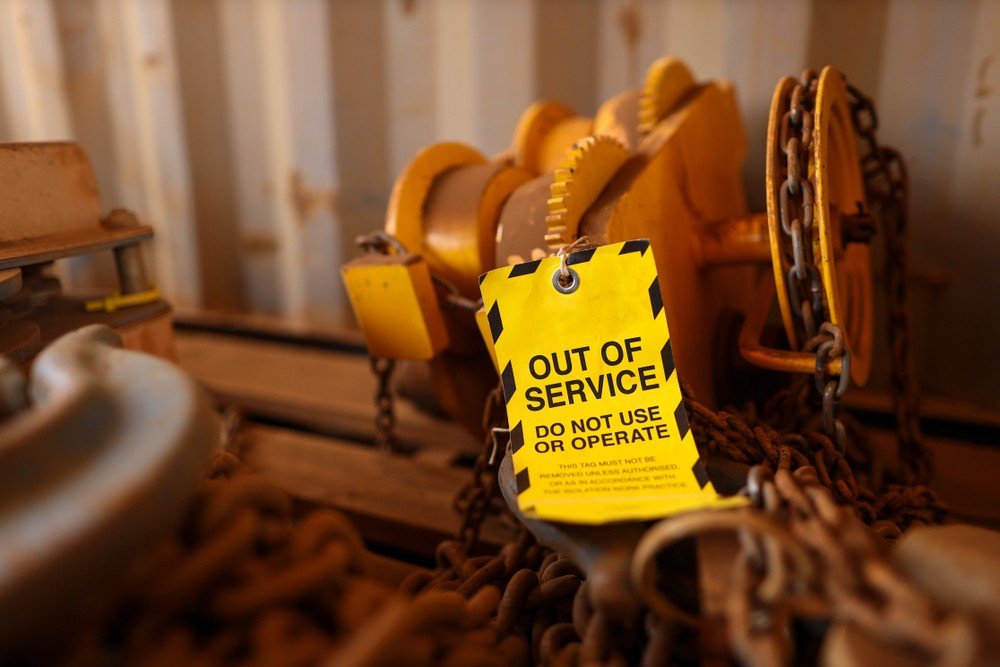
Downtime is the silent killer of productivity in industrial operations. According to the SMRP Best Practices metrics, unplanned downtime can cost manufacturers hundreds of thousands per hour, and yet, many facilities still treat it as an unavoidable part of doing business.
It doesn’t have to be. Below are five proven best practices that can reduce downtime by up to 20%, plus one unexpected strategy at the end that most facilities overlook.
The State of Maintenance Today
According to the 2024 State of Industrial Maintenance Report, 65% of facilities reported that shifting toward proactive maintenance strategies is the most effective way to reduce unplanned downtime incidents.
See full report here: https://software.getmaintainx.com/hubfs/State%20of%20Industrial%20Maintenance%202024/2024%20State%20of%20Industrial%20Maintenance%20Report.pdf
Similarly, industry insights show that:
67% of manufacturing companies use preventive maintenance as their primary approach to minimize downtime.
Condition monitoring and predictive technologies are increasingly being adopted to supplement preventive strategies.
These trends reflect a clear industry shift from reactive maintenance toward preventive and predictive frameworks.
1. Track the Right KPIs (and Use Them to Drive Decisions)
The Society for Maintenance & Reliability Professionals (SMRP) has developed a set of standardized metrics that help teams quantify maintenance performance, identify gaps, and measure progress toward reducing downtime.
Key Maintenance Metrics to Track:
📌 Planned vs Reactive Maintenance Ratio — % of work that was planned (not emergency). Higher planned work usually means fewer disruptions.
📌 Mean Time Between Failures (MTBF) — Average time that equipment runs without failing.
📌 Mean Time To Repair (MTTR) — How long it takes to restore equipment after failure.
📌 Preventive Maintenance (PM) Compliance — Percent of scheduled PM tasks completed on time.
📌 Overall Equipment Effectiveness (OEE) — How effectively assets are utilized (availability × performance × quality).
These metrics help you diagnose patterns, prioritize improvement areas, and show progress over time. For deeper guidance, use SMRP’s Best Practices & Metrics guide (70+ standardized KPI definitions and methodologies).
Learn more about Maintenance KPIs from : https://smrp.org/SMRP-Library

2. Strengthen Preventive Maintenance Programs
Preventive maintenance (PM) is the operational core of a proactive strategy, but only if it’s actively managed and continuously improved.
Recent industry surveys confirm that about two‑thirds of facilities rely on PM as a primary tactic to reduce equipment failures and unplanned downtime. But just having a PM schedule isn’t enough… what matters is how well it’s working, and whether you’re adapting it over time.
How to Make PMs Work:
Build tasks based on OEM recommendations and your site’s actual failure history.
Use your CMMS to automate scheduling, track completions, and flag overdue PMs.
Start with high-value or high-risk assets, then expand.
Audit PM work orders, check that they’re completed fully and correctly, not just closed out in the system.
Regularly review and optimize the PM frequency and content:
If a calibration check is being done monthly but hasn’t needed adjustment in a year, reduce it to quarterly.
If a pump keeps failing despite monthly checks, either increase the frequency or revise the procedure, you might not be checking the right failure mode.
Make It Dynamic, Not Set-and-Forget
No PM program is perfect. It should evolve constantly based on data, downtime events, and operator feedback.
Consider setting a semi-annual PM program review cycle to ask:
Are these PMs still valuable?
Are we spending time on low-risk items while missing real issues?
Are technicians doing “checkbox PMs” that aren’t delivering results?
High PM compliance correlates with fewer unplanned failures, but only when the PM work itself is aligned to actual risk and failure modes. An outdated or misaligned PM schedule can waste valuable technician hours or give a false sense of control.
A living, reviewed, and responsive PM program is what truly delivers reliability.
3. Adopt Predictive Maintenance (PdM) to Catch Failures Before They Happen
While preventive maintenance (PM) follows a fixed time schedule, predictive maintenance (PdM) is driven by real-world data from your actual assets — enabling you to intervene only when needed and before failure occurs.
Traditional PdM Tools
Most facilities start with classic condition-monitoring techniques like:
Vibration Monitoring – Detects imbalances, misalignments, or bearing wear in rotating equipment.
Infrared Thermography – Identifies hotspots in electrical panels, motor windings, bearings, and steam traps.
Oil Analysis – Detects metal particles, moisture, or contamination in gearboxes, engines, or hydraulics.
Ultrasound – Pinpoints compressed air or steam leaks, bearing defects, or electrical arcing.
Motor Circuit Analysis / Meggering– Tests motor windings and insulation for early-stage electrical faults.
These are tried-and-true PdM techniques, and every reliability program should leverage them
But that’s just the start.
Evolving Beyond the Basics: Site-Specific Predictive Maintenance
The most effective PdM isn’t just about fancy tools, it’s about monitoring what matters most to your facility. Think of the breakdowns that cause the most pain:
The motor that keeps failing on night shift or weekends
The pump that shuts down production
The sensor that triggers costly false alarms
These are the failure points that deserve custom predictive strategies.
Examples of Smarter PdM Applications:
Motor Current Signature Analysis: Subtle shifts in amperage can indicate bearing fatigue, imbalance, or need for lubrication, long before audible noise or heat shows up.
Temperature Trending: Instead of annual infrared scans, install permanent sensors that flag degradation in real time.
Flow Rate Monitoring: Detect partial blockages or pump inefficiencies before thermal issues affect operations.
Tank Level Patterns: Erratic or unexpected tank filling/emptying rates can signal valve or instrument drift.
PLC Alarm Pattern Analysis: Are multiple small nuisance alarms a warning sign of a bigger failure brewing?
Turning Data into Action
Most facilities already have some kind of data stream from PLCs, HMIs, SCADA, or BMS systems, but the problem is that we often react to alarms, rather than use the trends to inform strategy.
Ask:
What readings spike right before a breakdown?
Can a PM task be triggered by a data point?
Do our controls generate usable trend data , or just react to thresholds?
By connecting the dots between control data and maintenance, you can define new condition-based PMs that truly predict… not just respond.
And with AI and machine learning increasingly embedded in modern PdM tools, systems can now learn what “normal” looks like and alert you the moment a piece of equipment starts acting differently.
Predictive maintenance isn’t a luxury. It’s a mindset shift.
You don’t need a million-dollar sensor suite, you just need to ask: “What failure hurts the most and how could we see it coming next time?”
4. Build Workforce Competency and Accountability
Even the best systems fail without skilled people running them.
Maintenance teams should be trained not just in task execution, but also in:
Root cause analysis and troubleshooting
KPI interpretation and action planning
Effective use of CMMS and condition monitoring tools
Training frameworks that align with recognized maintenance and reliability best practices help ensure maintenance activities are both efficient and effective.
5. Prioritize Work Based on Risk and Impact
Not all equipment failures are created equal.
Use asset criticality and risk assessment to determine where to put energy first:
✅ Assets whose failure stops production
✅ Equipment with frequent history of breakdowns
✅ Systems that are safety‑critical or compliance‑critical
Risk‑Based Inspection (RBI) tools help teams prioritize based on risk levels and consequences, ensuring high‑impact assets get attention before less critical ones.
6. Use a CMMS to Drive Data and Execution
A Computerized Maintenance Management System (CMMS) is pivotal to lowering downtime.
With a CMMS, you can:
Automate maintenance scheduling
Centralize work orders and histories
Track maintenance KPIs
Integrate condition data from sensors
Build dashboards to monitor performance over time
Platforms like MaintainX help teams track asset health and automate preventive activities, critical steps toward reducing unplanned downtime.
Expected Results: From Data to Downtime Reduction
When these processes are implemented and measured consistently:
✔ Facilities shift toward higher planned maintenance ratios
✔ Predictive analytics replace guesswork
✔ KPI tracking identifies and eliminates recurring failure modes
Many teams using these proactive strategies report clear alignment between maintenance improvements and reduced unplanned downtime, making goals like a 20% reduction in downtime achievable and measurable.
Now, One Unexpected Maintenance Best Practice…
Letting Operators Do Less
Here’s the twist most reliability textbooks never mention:
One of the fastest ways to reduce unplanned downtime is to make your operators’ jobs easier.
Not by adding more training.
Not by issuing more rules.
But by reducing the reasons they cut corners in the first place.
Why Operators Take Shortcuts
You’ve seen this pattern:
A pushbutton is jammed down with tape or a zip tie so it doesn’t have to be held by hand.
A limit switch is manually overridden so a machine can keep cycling even when it shouldn’t.
Guards are removed or interlocks defeated to “save time” during setups or changeovers.
A sensor is cleaned or nudged to make a false reading “go away” instead of reporting it.
A jog button is pulsed repeatedly to force a start sequence instead of investigating a fault.
Bypassing a downtime screen by cycling the key switch or restart sequence without resolving the root cause.
Manual feed of product into an automated system that’s faulted, just to “get things moving again.”
Running a pump or conveyor dry or while starved because upstream flow isn’t available yet.
No one files a report. No one wants to delay production. And it’s always someone else’s problem, until the equipment fails again, and maintenance has to fix it.
This isn’t laziness… it’s operational strain.
When an operator’s job is:
Physically difficult
Rushed or under schedule pressure
Full of outdated procedures
Lacking the right tools or information
…they look for the path of least resistance. And that often damages equipment or introduces hidden failure modes that show up later.
Make the Job Easier.. Don’t Just Monitor (or Disipline) Behaviour
Here’s the key mindset shift:
Don’t try to fix operator behaviour… fix the job itself.
Instead of more checklists or punitive policies, involve operators directly in identifying what makes their jobs hard.
Questions to ask:
What’s awkward, annoying, or risky about doing this task the right way?
What workarounds are being used, and why?
How could we simplify this task, remove steps, or reduce decision points?
How can I help make your job easier?
You often find solutions like:
Redesign tasks to eliminate unnecessary steps
→ Use Lean methods like task elimination and motion study to redesign operator actions, so fewer steps are needed to complete a task, not just shorter procedures, but less procedure altogether.
Build in mistake-proofing (poka-yoke) at the control level
→ Modify the HMI or PLC logic so machines can’t be restarted without resolving specific alarms. Don’t rely on training, engineer the error out of the process.
Integrate job aids into the machine interface
→ Instead of paper instructions, embed short videos, step-by-step fault trees, or real-time support into the HMI, tablet, or scanner system, right at the moment of need.
Simplify tool access through ‘Grab-and-Go’ kitting
→ Use tool shadow boards or operator-specific tool kits that are portable, job-sequenced, and auto-restocked. Think like a pit crew, not a tool crib.
Introduce intelligent fault escalation logic
→ Use data from past faults to prioritize alarms by downtime cost and guide the operator to the most probable solution first, rather than generic fault codes.
Use ODR (Operator-Driven Reliability) with visual inspections
→ Empower operators with structured checklists and visual defect tags to catch early issues and give them authority to log faults that trigger actual follow-up, not clipboard purgatory.
Automate the boring stuff
→ If an operator’s job is repetitive or error-prone (e.g., manual temperature recording, barcode scanning, or confirming flow states), automate those steps and free up brain space for judgment tasks.
Tie changes to actual operator feedback
→ Run “operator design audits” during downtime or shift change where frontline staff walk through what slows them down or forces a workaround and then actually implement their ideas.
When tasks are simpler, documented clearly, and resourced properly, operators follow the process and downtime goes down.
Real Results: Less Operator Intervention = Less Downtime
Operator‑induced failures are a top invisible driver of maintenance backlog.
A 2019 Reliable Plant report found that 43% of equipment failures were linked to human error, often tied to rushed or inconsistent operation practices.
A Maintenance & Reliability Technology study found that operator‑driven reliability programs (ODRs) focusing on task simplification reduced unplanned downtime by 20–25% in large industrial facilities.
These studies show that supporting operators — not just policing them — directly improves uptime.
Start the Conversation:
“What can we take off your plate?”
Instead of disciplinary action when equipment is damaged, try something like:
“We noticed a few issues with how this machine is being operated. It might mean your job is harder than it needs to be. What would make it easier?”
This reframes the dialogue from blame to collaboration — and it works.
Because when operators have less unnecessary work to do — and the right tools to do it — they do it right.
And when they do it right, you produce more, with fewer breakdowns.
📩 Free Maintenance Consultation
If you want help assessing your maintenance program, benchmarking KPIs, or building a roadmap to reduce downtime, SparksPro Solutions can help.
Book a free consultation to explore where your program stands — and how to make measurable progress.
