

Why LOTO Programs Fail: Gaps Every Audit Uncovers
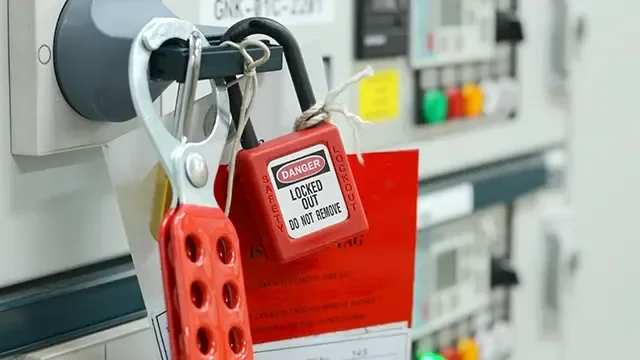
The hidden weaknesses behind lockout/tagout programs and how to fix them
Lockout/Tagout (LOTO) programs exist for one reason: to prevent workers from being injured or killed by uncontrolled energy during maintenance or servicing.
Yet across Canada, hazardous energy incidents continue to happen.
In 2022 alone, Canada recorded 993 workplace fatalities and nearly 348,747 lost-time injury claims, demonstrating the scale of occupational risk across industries.
Machinery-related hazards remain a major contributor. Historical WSIB data in Ontario shows thousands of machine-related injuries every year, including amputations and crush injuries.
Many of these incidents occur during maintenance or servicing when equipment safeguards are removed.
LOTO violations have also been on the rise, increasing by 29% from 2022 to 2023, with the manufacturing sector being the most affected.
That’s exactly the situation LOTO programs are designed to control.

Image sourced from https://www.canadasafetytraining.com/
The Reality of Hazardous Energy Risks in Canada
Research shows hazardous energy is one of the most persistent risks in industrial workplaces.
Studies estimate around 10% of workplace injuries in Canada are linked to improper lockout/tagout practices, highlighting the importance of strong energy control procedures.
Additionally:
Lockout/tagout violations and missing machine guarding account for up to 65% of serious machinery injuries in some industrial environments.
Hazardous energy incidents often involve unexpected startup, stored energy release, or moving machinery during maintenance activities.
In other words:
LOTO programs are one of the most critical safety systems in any industrial operation.
But audits repeatedly show that many programs exist on paper while failing in practice.
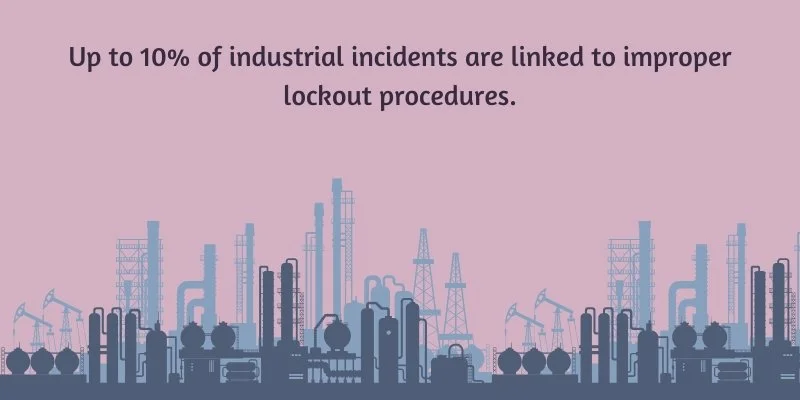
Image sourced from https://www.canadasafetytraining.com/
Gap #1: Procedures That Don’t Match the Equipment
One of the most common audit findings is generic or outdated lockout procedures.
Organizations often adopt template procedures or manufacturer documentation without confirming whether it reflects the actual equipment configuration on site.
Common problems include:
Missing energy sources
Incorrect isolation points
Unidentified stored energy sources
Equipment modifications not reflected in procedures
When procedures don’t match reality, workers quickly lose confidence in them.
And when workers lose trust in procedures, they improvise.
Gap #2: Incomplete Energy Source Identification
Many programs focus only on electrical isolation, but hazardous energy comes in many forms:
Electrical
Hydraulic
Pneumatic
Mechanical
Thermal
Chemical
Gravity
Stored energy (springs, capacitors, pressure)
Canadian safety guidance emphasizes that hazardous energy control programs must address all possible energy sources, not just electrical systems.
Audits frequently uncover situations where:
Pneumatic pressure remains trapped
Hydraulic accumulators retain energy
Capacitors remain charged
Gravity loads are not secured
Any one of these can cause serious injury if not properly controlled.
Gap #3: Procedures Are Not Followed During Real Work
One of the hardest truths uncovered in audits is this:
The problem is often not the procedure itself , it’s that workers don’t follow it.
Reasons commonly include:
Procedures take too long
Production pressure
Lack of understanding
Poor supervision
Workarounds becoming normalized
Research into machinery incidents shows that many serious injuries occur when workers service equipment without properly isolating energy sources, even when procedures exist.
This is where safety culture and operational pressure collide.
Gap #4: Verification Is Skipped
One of the most critical steps in LOTO is also one of the most commonly skipped:
Verification of zero energy
Too many programs stop at applying locks and tags without confirming that the equipment is truly de-energized.
Proper verification should include:
Testing electrical circuits
Attempting start-up
Releasing stored energy
Confirming pressure is zero
Without verification, workers are relying on assumptions instead of evidence.
And hazardous energy failures happen instantly.
Gap #5: Training Is Treated as a One-Time Event
Another common audit gap is insufficient or outdated training.
Workers may receive LOTO training during orientation but never again.
Over time:
Roles become unclear
Procedures drift
New equipment is introduced
Contractors bring different practices
Canadian safety standards such as CSA Z460 (Control of Hazardous Energy) emphasize ongoing training, verification of competence, and periodic program review to ensure workers remain capable of safely performing lockout procedures.Without continuous training, even a well-designed program loses effectiveness.
Gap #6: Contractor Coordination Breakdowns
During shutdowns or major maintenance projects, multiple teams may work on the same equipment.
Audits frequently reveal confusion about:
Who owns the lockout system
Whether contractor locks are compatible
Who verifies isolation
How group lockouts are managed
These coordination failures create serious hazards.
One missed communication can expose workers to unexpected energy release.
Gap #7: No Program Auditing or Continuous Improvement
Finally, many organizations create a LOTO program once and never revisit it.
But effective programs require regular audits to ensure procedures still reflect reality.
A proper audit should evaluate:
Procedure accuracy
Worker understanding
Equipment isolation effectiveness
Training records
Incident and near-miss trends
Without audits, small weaknesses remain hidden until a serious incident occurs.
The Real Reason LOTO Programs Fail
Most failures are not technical.
They are organizational.
Programs fail when companies prioritize:
Documentation over practice
Compliance over understanding
speed over safety
A LOTO program is not just a procedure manual.
It is a system of engineering controls, training, verification, and culture.
Final Thought: LOTO Is About Life, Not Compliance
Lockout/tagout failures are rarely minor.
They often involve:
amputations
electrocution
crushing injuries
fatalities
When hazardous energy is uncontrolled, incidents happen fast—and consequences are severe.
The purpose of a LOTO program isn’t to satisfy auditors.
It’s to ensure that every worker goes home safely after maintenance work is complete.
Need Help Auditing Your LOTO Program?
At SparksPro Solutions, we help industrial organizations:
Audit lockout/tagout programs
Develop equipment-specific procedures
Train workers and supervisors
Improve hazardous energy control systems
📩 Contact us for a free consultation to evaluate your LOTO program and identify hidden gaps before an incident occurs.
