

Electrical Safety Policy: When Is ‘Qualified Person’ Just a Title?
“Only to be performed by a qualified person.”
You’ve seen the phrase a hundred times in electrical safety policies.
It sounds responsible. It checks the box.
But what if it’s just a title?
What if your policy doesn’t define what qualified really means?
In too many workplaces, “qualified” is assumed, and never actually proven or defined.
The Risk of Leaving It Undefined
When electrical safety policies use the term qualified person without clarity, companies open themselves up to:
⚡ Untrained workers performing hazardous tasks
📄 Auditors flagging vague or incomplete policies
⚖️ Legal exposure after an incident
❌ False sense of compliance across the organization
According to the Electrical Safety Authority’s 2024 OESR report:
30% of electrical incidents occurred when the worker lacked documented proof of qualification
The maintenance sector reported one of the highest rates of electrical-related injuries
In many incidents, “inadequate training” and “unclear procedures” were listed as root causes
Source: ESA OESR 2024 Report: https://esasafe.com/assets/files/esasafe/pdf/Corporate_Reports/OESR2024-Final.pdf
What Should Define a “Qualified Person”?
CSA Z462-24 offers a clear definition:
A Qualified Person is trained, competent, and authorized to perform specific tasks based on hazard knowledge, system familiarity, and practical ability.
So in your policy, “qualified” should mean someone who has:
Documented electrical safety training, especially related to arc flash, shock, and PPE use
Demonstrated knowledge of your site’s systems, voltage levels, and hazards
Authorization for specific tasks, not a blanket role
Refresher training at intervals aligned with risk and complexity
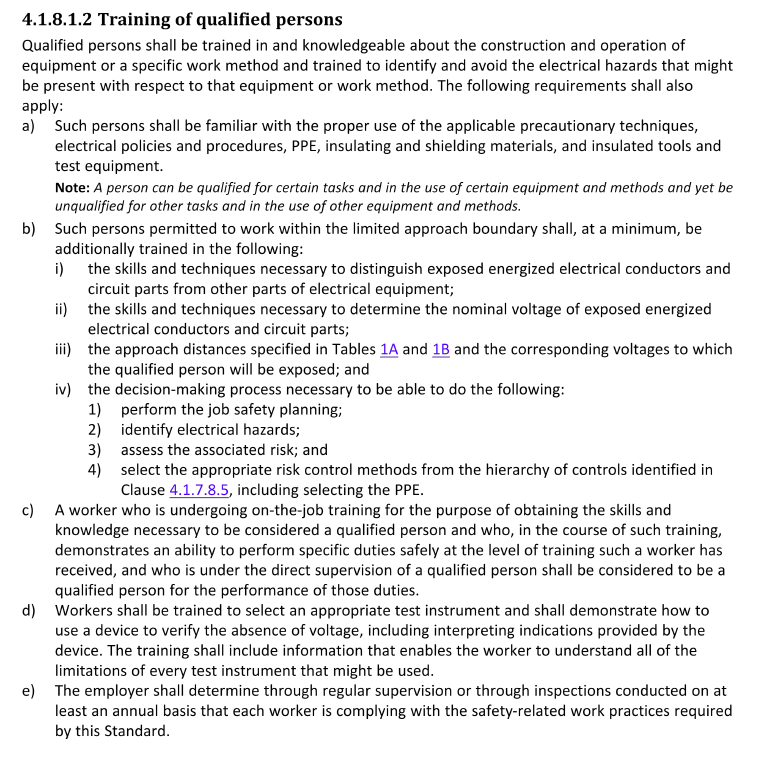
Here is a snippet of “Training of qualified persons” directly from the Z462:
Source: CSA: Z462: 2024
Why Just Having an Electrician’s License Isn’t Enough
Holding a license proves general knowledge and skills.
But being “qualified” under CSA Z462 means they’re competent to perform a specific task, in a specific environment, under specific conditions, with awareness of site-specific hazards like:
High arc flash incident energy levels
Complex lockout/tagout procedures
Aging electrical infrastructure
Exposure to energized parts during troubleshooting
A millwright or industrial electrician could be licensed, yet unqualified for a high-voltage panel in your facility if they’ve never been trained on that system.
How to Build This Into Your Policy
Here are 5 ways to strengthen your electrical safety program today:
Define “Qualified” in Your Glossary or Scope
Use CSA Z462 language to set a clear, measurable baseline.
Map Out Hazardous Tasks
List the tasks in your facility that require qualification (e.g., testing for absence of voltage, operating disconnects, working inside arc flash boundaries).
Create a Competency Matrix
Track who is qualified for what, with links to training records, signed authorizations, and dates.
Add Demonstrative Performances to Your Program
Use demonstrative task-based evaluation tools, not just completion certificates.
Include Refresher Frequency and Auditing
Annual review is recommended by CSA. Include a plan for reevaluation and auditing.
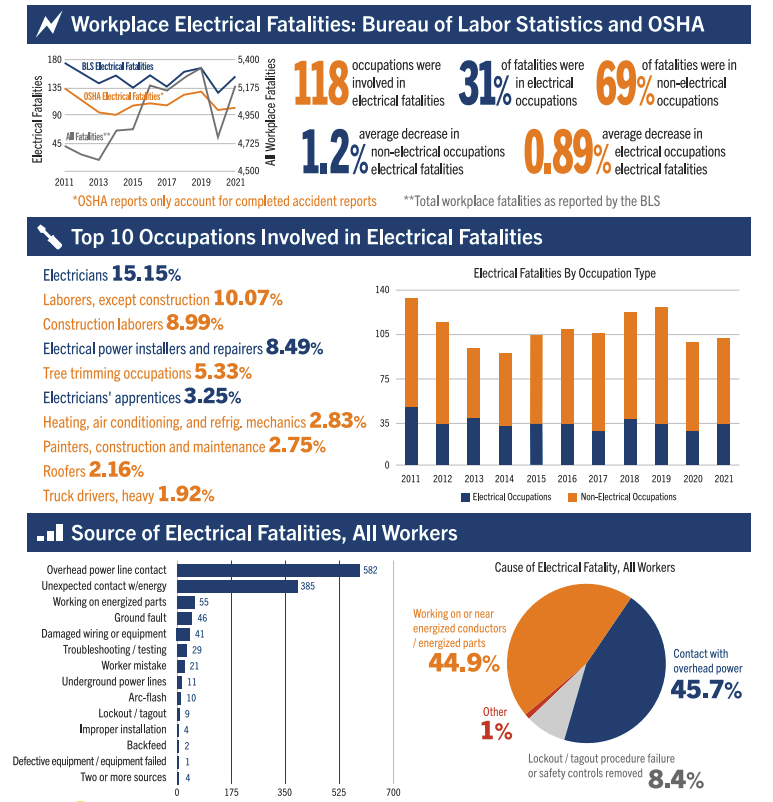
Source: ESFI
Infographic Link: https://www.esfi.org/wp-content/uploads/2023/01/Electrical-Fatalities-in-the-Workplace-Infographic-2011-2021-1.pdf
Why This Isn’t Just a Paperwork Issue
Let’s be blunt:
If your policy says “qualified person” but you haven’t defined what that means—
You’re setting your team up for failure.
Your electricians deserve more than a title.
They deserve support, documentation, and real training that matches the hazards they face daily.
And your company deserves protection from liability and reputational harm.
SparksPro Can Help
At SparksPro, we help heavy-industry clients:
🔍 Audit their electrical safety programs for compliance gaps
🧰 Build competency frameworks and training plans
✅ Document what “qualified” means for your site and team
Book a free consultation to see where your policy stands, if you have one, and how to protect your workers and business better. At SparksPro, we like to say advise if free.
