

Rescue Ready: How to Develop a Confined Space Rescue Plan That Works
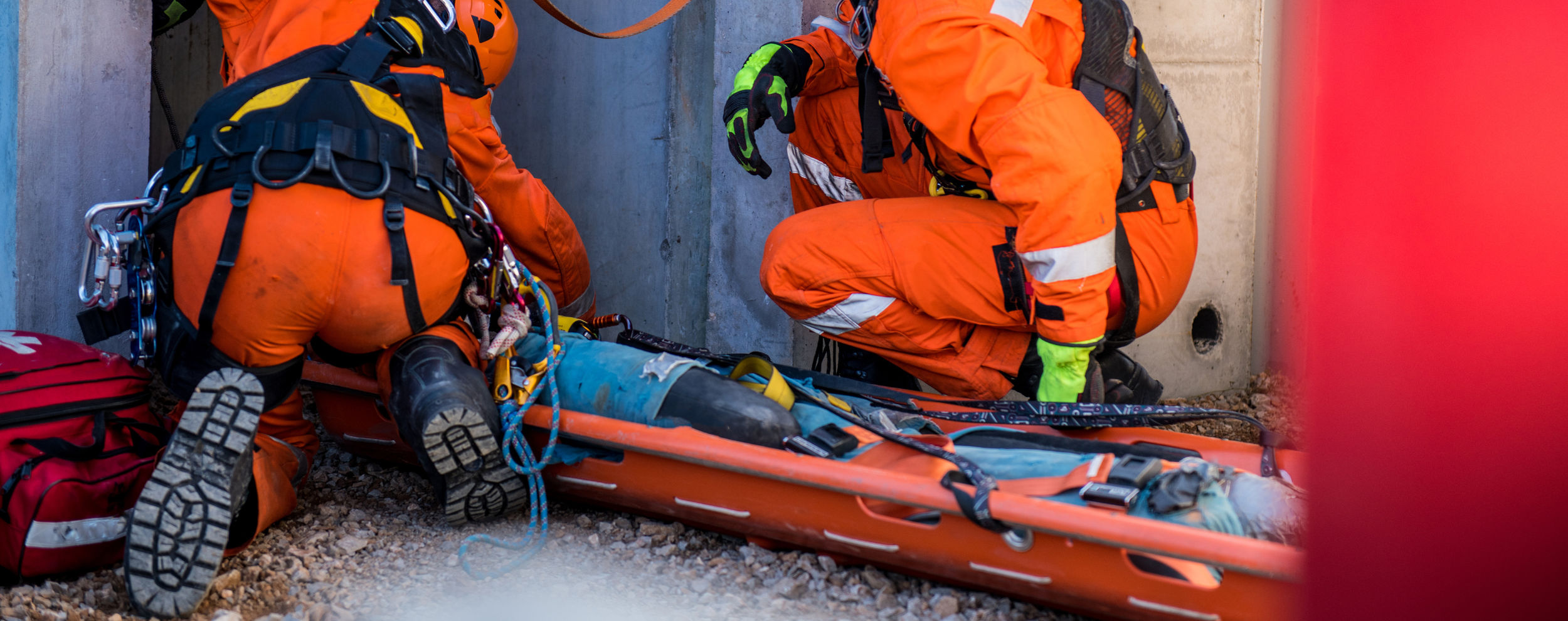
A practical guide for Ontario workplaces, beyond compliance, into real‑world readiness
Confined spaces are dangerous not just because of what’s inside, but because of how limited access, poor ventilation, and unpredictable conditions combine to create high-risk environments. A toxic atmosphere, a sudden engulfment, or a fall can turn routine work into an emergency, and without a well-developed rescue plan, lives are at stake.
Ontario’s Confined Spaces Regulation (O. Reg. 632/05) under the Occupational Health and Safety Act (OHSA) mandates written rescue procedures before any worker enters a confined space and requires that trained personnel and appropriate rescue equipment be available to implement those procedures immediately.
But simply having a piece of paper labeled “Rescue Plan” isn’t enough. A good rescue plan must be clear, functional, tailored to specific risks, and tested regularly.
In this post, we break down the steps to develop an effective confined space rescue plan, legally compliant in Ontario and built for real emergencies.
1. Understand the Regulatory Foundation
Ontario Regulation 632/05 defines confined spaces and sets specific obligations:
Written on‑site rescue procedures must be developed and ready for immediate implementation before entry.
Rescue personnel must be trained in the on‑site procedures, first aid, CPR, and the use of rescue equipment.
Appropriate rescue equipment must be accessible and maintained.
Methods of communication must be established.
Failing to meet these requirements can lead to orders, stop work notices, or prosecution — especially if an incident occurs.
You can access the Confined Space Regulation here:
👉 https://www.ontario.ca/laws/regulation/050632
CSA Z1006: A Best-Practice Standard You Should Know
In addition to legal obligations, it’s wise to align your program with CSA Z1006: Management of Work in Confined Spaces. This voluntary Canadian standard complements OHSA by offering detailed best practices for identifying confined spaces, assessing risk, training workers, and, crucially, developing rescue procedures.
CSA Z1006 includes:
Guidance on conducting hazard assessments and entry permits
Criteria for rescue team selection, training, and competency
Requirements for rescue practice exercises
Recommendations for equipment and communications planning
Insights on contractor management and third-party rescues
While the CSA standard is not itself law, courts often consider it during investigations and prosecutions to evaluate due diligence. If you’re building or overhauling a confined space program, having a copy of Z1006 on hand is a smart move, especially if you’re in charge of safety or compliance.
You can purchase or access it through:
👉 CSA Group: https://www.csagroup.org/store/product/CSA_Z1006%3A23/
2. Conduct a Thorough Hazard Assessment (Before You Write the Rescue Plan)
Before developing any confined space rescue plan, you need to know exactly what you’re planning for. That means conducting a task-specific, space-specific hazard assessment, not relying on general assumptions or boilerplate checklists.
Understand: What Are You Rescuing From?
Hazards in confined spaces vary widely. Your assessment must clearly identify and document the full range of potential hazards related to both the space and the task to be performed. Start by examining:
Atmospheric Hazards:
Oxygen deficiency or enrichment
Flammable gases or vapours
Toxic substances (e.g., H₂S, CO, cleaning solvents)
Potential for sudden atmospheric change (e.g., welding, chemical reactions)
Physical Hazards:
Engulfment by material (e.g., grain, sawdust, liquids)
Mechanical entrapment (e.g., moving parts, augers, rotating equipment)
Electrical hazards or stored energy
Elevated temperatures or extremes in humidity
Configuration Hazards:
Limited access or egress
Vertical entries or obstructed exits
Distance from rescue team or emergency services
Work-Specific Hazards:
Introduction of new equipment, tools, or substances
Tasks like hot work, cleaning, or component removal
Lone worker scenarios or communications issues
Use the Flowchart to Guide Control Selection
The hazard assessment must directly inform your rescue planning. To help structure this process, we recommend using the flowchart below, adapted from regulatory guidance and best practices
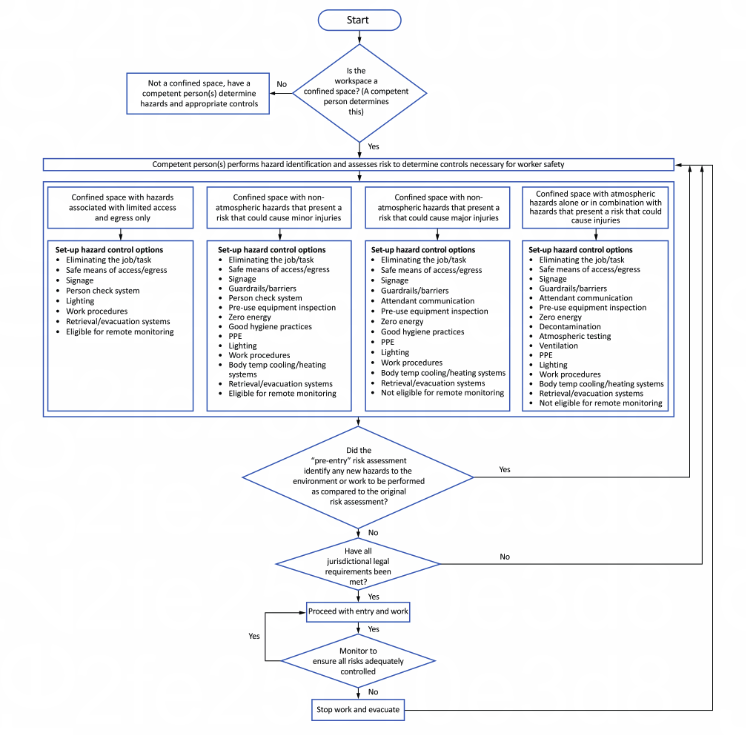
Source: Figure A.1 from CSA Z1006
This tool shows how a competent person classifies the confined space based on hazard type (e.g., atmospheric, non-atmospheric, or limited access) and selects appropriate control measures from options such as:
Pre-use equipment inspection
Ventilation and atmospheric monitoring
Guardrails and zero-energy protocols
Retrieval systems and body temp regulation
PPE and communication protocols
It also reinforces a critical practice often overlooked:
Reassess hazards before entry every time.
Even if the space was previously deemed low-risk, new tools, processes, or environmental conditions can reintroduce serious dangers.
3. Assign Roles and Responsibilities
A rescue plan is only as good as the people executing it. A complete plan should clearly define:
Rescue Team Members
Individuals trained and equipped to perform confined space rescue. They must be available before entry is made.
Entry Attendants
Personnel who stay outside the space, maintain communication, monitor conditions, and initiate the rescue if needed.
Entrants
The workers actually inside the space who must understand the rescue plan, signals, and procedures.
Communication Coordinator
A person responsible for maintaining reliable communication (radios, signal systems, etc.) and activating emergency services if internal rescue efforts fail.
Each individual should have documented training, understanding of their role, and a clear line of authority during a rescue event.
4. Choose and Inspect Rescue Equipment
Ontario law requires that rescue equipment be appropriate for the hazards identified and readily available.
Essential items may include:
Full‑body harnesses and retrieval lines
Tripod/anchor systems for vertical entry
Air monitoring devices
Supplied‑air respirators or SCBA for unknown or IDLH atmospheres
Stretchers or spinal boards
First aid and stabilization tools
The rescue plan should document:
Where equipment is stored
Who inspects it
Inspection frequency and records
Manufacturer’s instructions and training requirements
Inspection Records: Equipment must be inspected and maintained by a competent person, and records should be written.
5. Write the Rescue Procedures
Your rescue plan should be written, specific, and actionable. A generic plan won’t work in an emergency.
Key elements to include:
Pre‑Entry Activation
Who must be present before entry can begin?
Rescue Initiation Protocol
Clear criteria and methods for triggering a rescue (e.g., loss of communication, entrant in distress, alarm activation).
Step‑by‑Step Rescue Actions
Include roles, location of equipment, sequence of actions, and contingency options.
External Support Coordination
When and how to involve fire services or EMS.
Communication Methods
Radios, hand signals, phone lines, back‑up plans.
This plan must be ready for immediate implementation and synchronized with your confined space entry procedures.
The below flow chart from CSA Z1006 provides some insight on how rescue planning can be determined.
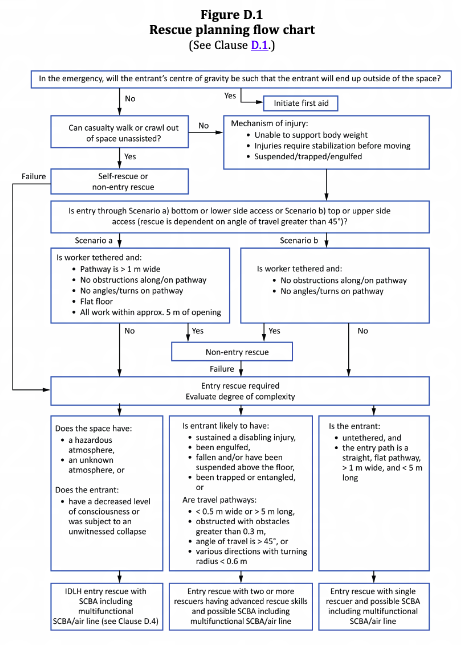
Source: Figure D.1 from CSA Z1006
6. Train and Certify Your Rescue Team
Regulation requires rescue personnel to be trained in:
The rescue procedures in your plan
First aid and CPR
Use of rescue equipment specific to your space and hazards
Training should be documented and refresher sessions scheduled regularly… not just a single classroom session.
If your team lacks the capability to perform a timely and effective rescue, consider partnering with a professional rescue service or third‑party rescue provider.
7. Test and Practice Your Plan
A written rescue plan that has never been tested is a piece of paper… not a safety tool.
Industry best practice (and guidance from CSA Z1006, the voluntary Canadian confined space standard) recommends:
Bi‑annual practice drills
Scenario‑based exercises that include:
Rescue deployment
Communication failure
Equipment challenges
External emergency services coordination
Even where Ontario regulation doesn’t mandate specific frequencies, testing prior to entry and at regular intervals ensures the plan works under stress.
Simulated drills help identify:
Gaps in equipment or training
Delays in communication
Misunderstood roles
Physical obstacles not seen in desktop planning
8. Audit, Review, and Improve
A rescue plan isn’t “set and forget.” Build review triggers into your safety management system:
After every confined space entry
Following a near miss or incident
After equipment changes
At least annually
Review documentation, training records, drill outcomes, and feedback from rescue team members and entrants.
This is part of your due diligence, showing that your rescue plan is living, regularly updated, and verified through testing.
Rescue Planning Saves Lives, Not Just Compliance
Under Ontario’s Confined Spaces Regulation, you must have written rescue procedures, trained personnel, and suitable equipment before workers enter a confined space.
But true preparedness goes beyond compliance. A rescue plan that is tailored, practiced, and continually improved is the difference between a controlled response and a preventable tragedy.
If you need help developing, evaluating, or testing your confined space rescue plan — from risk assessment to first drill , SparksPro can help.
📩 Book a free consultation or policy review today — because being prepared isn’t expensive; being unprepared is.
